


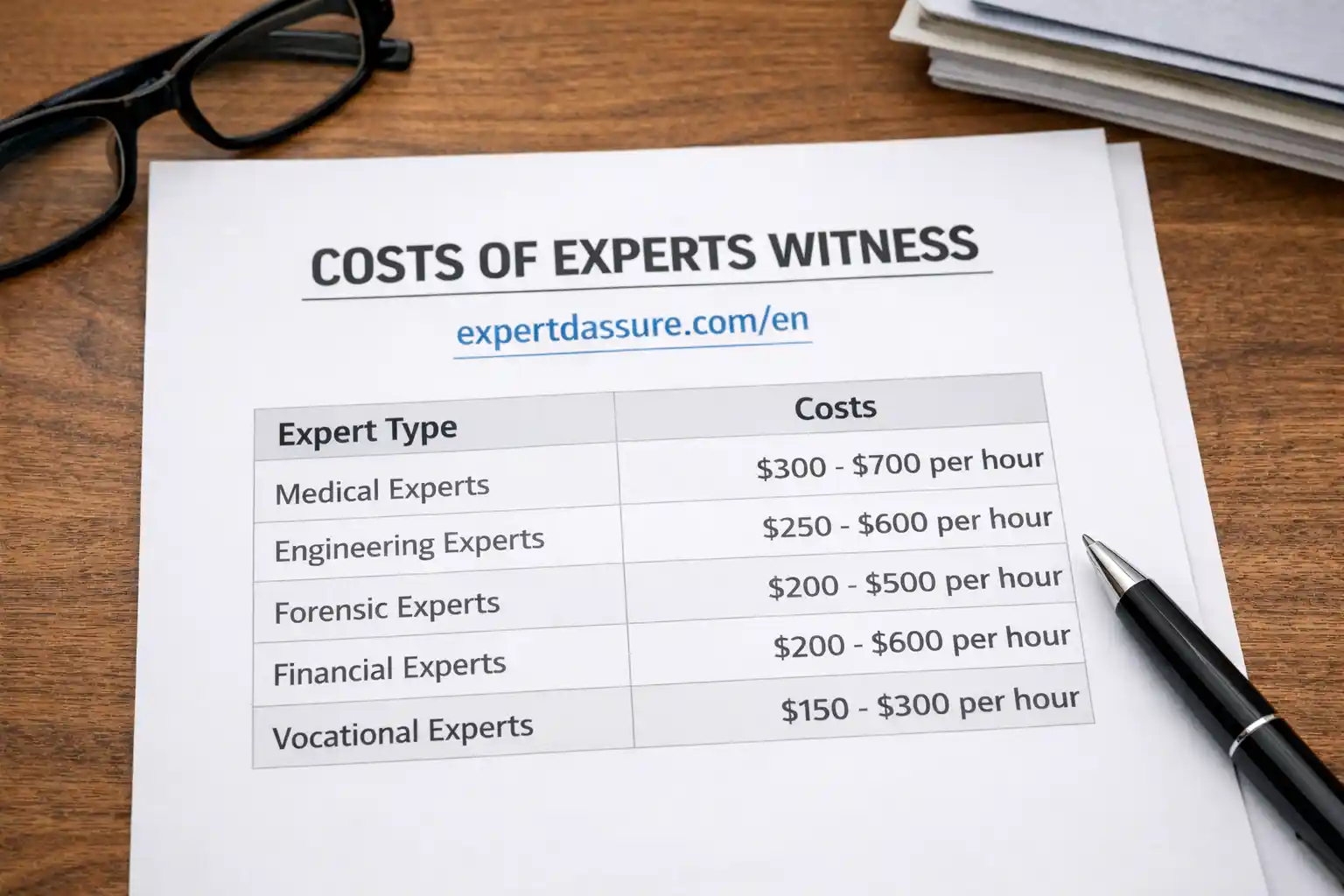
Expert Witness Costs and Fees
Expert witness costs and fees are the professional charges paid for specialist evidence in legal, arbitration, insurance or dispute proceedings. They can include case review, written reports, meetings, conferences, deposition, court attendance, travel, testing and administrative work depending on the expert’s role.
How to Understand Expert Witness Fees
Accessing a fair expert witness fee starts with defining the question the expert must answer. A lawyer, insurer, company or claimant should identify the discipline, documents, timetable, court rules and expected outputs before asking for quotations from suitable specialists in writing.
What an Expert Witness Does
An expert witness is not simply an adviser with technical knowledge. The expert is usually expected to provide independent, objective opinion evidence within their field, helping the court or tribunal understand issues that ordinary witnesses cannot explain from facts alone.
Why Costs Vary So Much
Expert witness costs vary because expertise varies across professions and jurisdictions worldwide. A medical specialist, structural engineer, forensic accountant, digital forensics analyst, valuation expert or accident reconstruction expert may charge differently because training, responsibility, scarcity, risk and preparation time differ.
Main Components of Expert Fees
The total fee is rarely only the hourly rate quoted at the beginning of instructions. A realistic budget should include preliminary review, correspondence, document analysis, meetings, report drafting, revision, lawyer questions, joint statements, hearings, waiting time, travel expenses and supplementary reports.
Hourly Rates
Many experts charge an hourly rate for reading documents, analysing evidence, answering questions and preparing opinions. Hourly billing can be fair for uncertain workloads, but the client should ask for an estimate, assumptions and warning before the work exceeds budget.
Retainer Fees
Some experts request a retainer before accepting instructions or reserving hearing time. A retainer may reserve availability, cover initial review or reduce payment risk. It should be clearly explained, including whether it is refundable, credited against future work or separate.
Initial Case Review Fees
Initial case review fees cover the expert’s first assessment of whether they can assist. This stage may include conflict checks, document screening, technical feasibility, preliminary comments and an estimate of the work required before a full report is commissioned formally.
Expert Report Fees
Expert report fees can be hourly, fixed or staged. A fixed report fee gives cost certainty, but only if the document volume, issues, assumptions and timetable are clear. Extra documents, new questions or urgent revisions may increase the final price.
Meeting and Conference Fees
Meetings with lawyers, insurers, clients or other experts are usually charged separately. These meetings can be useful for clarifying issues, narrowing disputes and preparing questions, but unnecessary calls can increase costs quickly when several professionals attend at hourly rates together.
Deposition and Oral Evidence Fees
Deposition, examination or oral evidence fees may be higher than ordinary review fees. Testifying places pressure on the expert, requires preparation and may block a full day. Some experts charge hourly, while others require half-day or daily attendance fees for availability.
Court Attendance Fees
Court attendance fees should be agreed in advance wherever possible. The fee may include preparation, waiting time, travel time or only time giving evidence, so the instructing party should clarify exactly what is covered before the hearing date arrives in court.
Travel and Waiting Costs
Travel costs can include mileage, train, flights, hotels, meals, taxis and parking. Remote hearings reduce some expenses, but time spent travelling, waiting or dealing with last-minute adjournments can still create charges unless the engagement letter limits them clearly beforehand in writing.
Administrative Costs
Administrative costs may include copying, secure file platforms, postage, transcription, laboratory coordination or assistant support. These items look small, but they can accumulate in document-heavy cases, especially when evidence must be organised, indexed, encrypted or shared securely with several parties.
Specialist Testing Costs
Specialist testing can make expert evidence more expensive than the main professional fee. Materials analysis, medical imaging, site inspections, forensic extraction, valuation databases, laboratory work or technical modelling may be necessary, but the client should approve major external costs first.
Medical Expert Witness Fees
Medical expert fees depend on specialty, case complexity, examination time, records volume and report urgency. A simple injury report may cost far less than a complex negligence opinion involving multiple records, prognosis, causation, disability, future care and cross-examination risk at trial.
Engineering and Construction Experts
Engineering and construction expert fees often involve site visits, drawings, photographs, defect schedules, building regulations, delay analysis or remedial cost estimates. These cases can become expensive because the expert must connect technical findings with documents, chronology and practical repair options.
Financial and Accounting Experts
Financial and accounting expert fees may cover business valuation, loss of profits, fraud analysis, tax issues, asset tracing or pension calculations. Costs often depend on data quality, number of accounts, assumptions, scenario modelling and the need to explain calculations clearly.
Digital Forensics Experts
Digital forensics and technology expert fees may include device imaging, data recovery, metadata analysis, cyber incident review or software assessment. Costs depend on evidence volume, chain of custody requirements, specialist tools and whether urgent preservation work is needed immediately after discovery.
Legal Aid and Public Funding
Publicly funded or legal aid cases may have controlled or guideline rates in some jurisdictions. These rates can be lower than private commercial rates, so the expert, lawyer and client must confirm approval requirements before assuming that every hour will be paid.
Who Pays the Expert Witness
In private litigation, the instructing party usually pays its own expert first. Even if costs may later be recovered from the opponent, recovery is not guaranteed and may be limited by court rules, budgets, proportionality or judicial assessment after the case.
Single Joint Expert Costs
A single joint expert can reduce costs when the court or parties agree to use one expert instead of competing experts. This approach may improve efficiency, but it requires careful joint instructions and may limit each party’s strategic control over evidence.
Recoverable Expert Fees
Recoverable expert fees are not always the same as fees actually paid by the client. A court may consider whether the expert was necessary, the work proportionate, the rate reasonable and the time justified before ordering another party to reimburse costs.
Budget Estimate
A budget estimate should separate phases of work rather than showing one vague figure. The estimate can list initial review, report, meetings, supplementary questions, conference, joint statement, hearing preparation, court attendance and travel, helping the client decide what is affordable.
Engagement Letter
The engagement letter is the most important fee document in an expert appointment. It should state hourly rates, fixed fees, retainers, cancellation terms, expenses, VAT or tax, payment deadlines, scope of work, confidentiality and what happens if the matter settles.
Controlling the Scope
Scope control prevents expert witness costs from expanding unexpectedly. Lawyers should send organised documents, clear questions and realistic deadlines. Clients should avoid repeated informal instructions, duplicate bundles and unnecessary revisions that make the expert spend paid time solving administrative confusion.
Cancellation Fees
Cancellation fees should be checked before hearings, depositions or site visits. Experts may charge if reserved dates are cancelled late because they refused other work. The fee should be proportionate and known in advance, especially where court timetables change often.
Urgent Work Premiums
Urgent work can increase fees because the expert must rearrange other commitments, work evenings or produce a report under pressure. A genuine emergency may justify higher cost, but urgency caused by poor planning should be avoided wherever possible by the team.
Conflict Checks and Availability
Before appointment, the expert should complete conflict checks and confirm availability for every key deadline. Paying an expert who later cannot act because of conflicts, qualifications, independence problems or timetable clashes creates wasted cost and can damage the case significantly.
Qualifications and Value
Qualifications matter, but the most expensive expert is not automatically the best choice. The instructing party should review experience, court history, report quality, independence, communication style, specialist relevance and ability to explain complex issues clearly under pressure in court testimony.
Comparing Expert Fees
Comparing expert witness fees should involve more than price alone. A lower hourly rate may cost more if the expert is slow, unclear or inexperienced. A higher rate may be efficient if the expert quickly identifies the key technical issues.
Cheap Expert Evidence Risk
Very cheap expert evidence can be risky when the case is serious. Poor reports, weak reasoning, missed documents or lack of independence can damage settlement prospects and trial credibility, making the apparent saving much smaller than the harm caused later.
High-Value Expert Evidence
High expert fees may be justified when the dispute value, technical complexity or litigation risk is significant. The key question is whether the expert’s work can materially assist the case, settlement strategy or decision-maker rather than simply add impressive paperwork.
Payment Responsibility
Payment responsibility should be clear from the beginning of the instruction. The lawyer may instruct the expert, but the client may ultimately fund the work. Insurance, legal expenses cover, litigation funding or public funding may also affect who pays and when.
Invoice Detail
Invoices should be detailed enough to understand the work performed and the time spent. A good invoice separates review, analysis, report drafting, meetings, travel and expenses. Vague billing can create mistrust when the final amount exceeds the original estimate unexpectedly.
Avoiding Fee Disputes
Fee disputes can be reduced by written instructions, phased budgets, regular updates and approval before major extra work. If disagreement arises, the parties should review the engagement letter, time records and scope changes before escalating the dispute unnecessarily further with lawyers.
Cost-Benefit Analysis
Cost-benefit analysis is essential before instructing an expert in any dispute. A small claim may not justify an expensive specialist report, while a high-value or technical dispute may require expert evidence to prove causation, loss, standard of care or quantum.
International Expert Witness Costs
International cases can increase expert witness costs through translation, foreign law coordination, travel, time zones, unfamiliar procedure and currency conversion. The engagement letter should specify governing terms, payment currency, tax treatment and whether testimony may be remote or in person.
Checklist Before Hiring
Before hiring an expert, the client should prepare a checklist covering expertise, independence, availability, fee basis, report deadline, documents required, travel needs, court experience and budget. This avoids rushed appointments and reduces the risk of unexpected costs later in the case.
Final Guide to Expert Witness Fees
Expert witness costs and fees should be managed like a litigation investment, not a blank cheque. The safest approach is clear instructions, written fee terms, staged budgets, proportionality, regular communication and an expert whose value matches the dispute properly overall.