Three roles, three fee logics
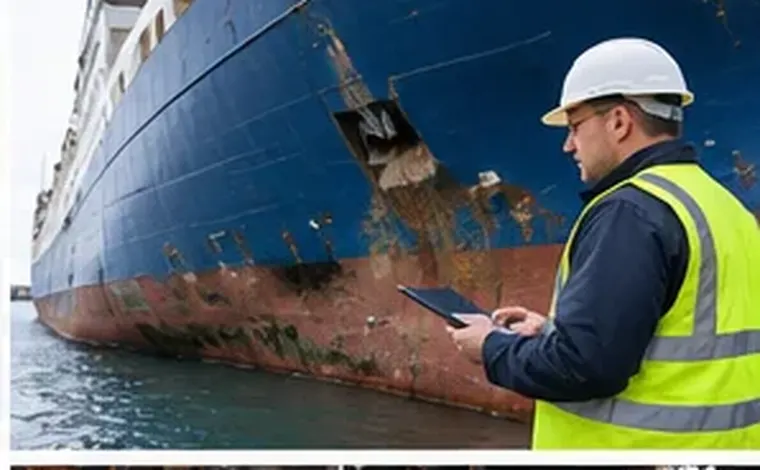
A cargo surveyor attends to establish the nature, cause and extent of damage, usually for a fixed fee or a daily rate plus expenses. A claims consultant acting for the cargo owner prepares the insurance claim, challenges deductions and negotiates the settlement, often on a percentage basis. A recovery specialist pursues carriers, forwarders or terminals, frequently on a contingency share of what is recovered.
Some firms combine these services; others focus on one. Understanding which role you are paying for avoids double charging and helps you compare offers that look different on paper.
Work covered by a claims consultant's fee
A full mandate typically includes reading the cargo policy and transport documents, checking that notices to carriers were given in time, attending or reviewing the survey, assembling invoices, packing lists and bills of lading, quantifying the loss including freight and insured uplift, arguing against exclusions such as insufficient packing, negotiating with the insurer and monitoring payment. On larger files it may also involve salvage sale arrangements and coordination with lawyers on recovery.
| Size of loss | Indicative fee |
|---|---|
| Up to 25,000 | 10 % to 15 %, or a fixed minimum fee |
| 25,001 to 100,000 | 7 % to 10 % |
| 100,001 to 500,000 | 5 % to 7 % |
| 500,001 to 2,000,000 | 3 % to 5 % |
| Over 2,000,000 | 1.5 % to 3 %, or hourly arrangement |
Indicative amounts, to be checked with each expert.
Market ranges by claim size
No official tariff exists for cargo claims representation in the UK, the United States, Canada, Australia or Ireland. The table below gives an indicative order of magnitude observed in the market for percentage engagements on the insurance side, in US dollars or equivalent. It is not a legal scale and individual quotations vary.
The rates decrease as the loss grows, since much of the work, such as document collection and survey attendance, is similar whether the shipment is worth twenty thousand or two million.
Fee structures you will encounter
When comparing proposals, look first at the base of calculation and then at the rate.
- Percentage of the total insured loss as finally agreed
- Percentage of the amount actually paid, after deductible and salvage proceeds
- Percentage of the improvement achieved over the insurer's initial position
- Contingency share of amounts recovered from carriers, commonly higher than on insurance claims because of the legal limits and litigation risk
- Fixed survey fees per attendance, with additional charges for sampling, laboratory tests or waiting time
- Hourly rates for complex disputes, with a minimum per instruction
Extras that change the final invoice
Survey attendance at remote ports, inland depots or overseas warehouses can add travel, local agent fees and translation costs. Laboratory analysis of contaminated or wet cargo, storage while goods await inspection and the organisation of salvage sales are often billed separately. VAT, GST or sales tax may be added depending on the country and the client's status. Ask for a written list of what is included and what is extra.
Who pays for surveys and claims handling
Many cargo policies provide that reasonable survey fees are reimbursed when the claim is valid, particularly where the survey was carried out by the agent named on the insurance certificate. Costs incurred to minimise loss, such as re-packing, sorting or moving goods to safety, may also be recoverable as mitigation expenses under the policy's duty of assured provisions.
The cargo owner's own claims consultant is a separate cost. Few standard cargo wordings include claims preparation cover, although tailored policies for large traders sometimes do, usually within a limit. If the claim is declined, survey fees may not be reimbursed at all, so the engagement terms with the surveyor matter too. Confirm the position with your broker before engaging help.
From a damaged pallet to a lost container
A small claim, for example USD 8,000 of crushed cartons, rarely justifies a percentage-based consultant. A survey by the certificate agent and direct handling through the broker is usually enough, and a minimum fee could absorb a large share of the settlement.
A medium claim, such as a reefer container of food worth USD 120,000 rejected after a temperature excursion, is where professional help is more frequently used. At an indicative 6 per cent on the full loss, the consultant's fee would be around USD 7,200 plus expenses and tax. If the agreement only covers the amount gained above an initial offer of USD 90,000, and the settlement reaches USD 115,000, a 15 per cent share of the USD 25,000 improvement would be about USD 3,750.
For a major loss, for example machinery cargo worth USD 3 million damaged during a heavy-lift operation, the percentage drops to the lower bands, but survey, engineering and legal costs increase. A combination of fixed fees for surveys and a negotiated percentage or hourly arrangement for the claim is typical.
Banded versus flat-rate calculation
Under a banded method, each slice of the loss is charged at its own rate. Using the indicative mid-points of the table on a USD 120,000 claim, that could mean 12.5 per cent of the first USD 25,000, 8.5 per cent of the next USD 75,000 and 6 per cent of the last USD 20,000, or roughly USD 10,700. A flat-rate method applies a single percentage to the whole amount. Ask which one is proposed and request a worked figure on your own claim.
Choosing and contracting with a specialist
Look for experience with your type of goods and transport mode, knowledge of the relevant conventions and a network of surveyors in the ports you use. A specialist who understands that carrier liability may be capped by weight or package limits will give a realistic view of what recovery can achieve.
The engagement letter should set out the scope, the fee base and rate, the minimum fee, expense policy, payment timing, the treatment of recoveries from carriers and what is owed if the claim fails. Be cautious with anyone who guarantees a full payment before seeing the policy and the survey, or who discourages you from talking to your broker.
- Compare at least two proposals using the same claim scenario
- Separate survey costs from claims handling costs
- Check whether recoveries from carriers are included or charged again
- Ask how disputes over the fee itself are resolved
Organisations offering this service
- W K Webster & Co: UK-based group specialising in marine and transport claims, offering claims handling, surveying coordination and recovery services.
- International Institute of Marine Surveying (IIMS): International professional institute for marine surveyors, operating regional websites and publishing regular news bulletins for its members worldwide.
- International Institute of Marine Surveying (IIMS): International professional body for marine surveyors, providing training, accreditation and a worldwide network of member surveyors organised by region.
- Financial Ombudsman Service: Official free dispute resolution service in the United Kingdom, handling complaints from policyholders against insurers, including disputed or rejected insurance claims.
External links provided for information only; check the terms directly with each organisation.
Frequently asked questions
Is the cargo survey fee paid by the insurer?
Often yes when the claim is accepted and the survey was reasonable, particularly if carried out by the agent named on the certificate. Check your policy and certificate.
Why are recovery fees higher than claims handling fees?
Recoveries against carriers face liability limits, time bars and litigation risk, and the agent often carries the cost of pursuing them, so contingency shares tend to be higher.
Can I handle a cargo claim without paying an expert?
For small, clear claims, yes. Notify promptly, obtain a survey, gather documents and work through your broker.
Are fees charged if the insurer refuses the claim?
That depends on the contract. Pure success-fee arrangements may cost nothing, while others charge expenses, survey costs or a minimum fee.
Cargo claims costs depend on who does what, on which base the fee is calculated and on what the policy reimburses. Ask for clear written terms and keep the expense proportionate to the loss.