What you are paying for in a flood mandate
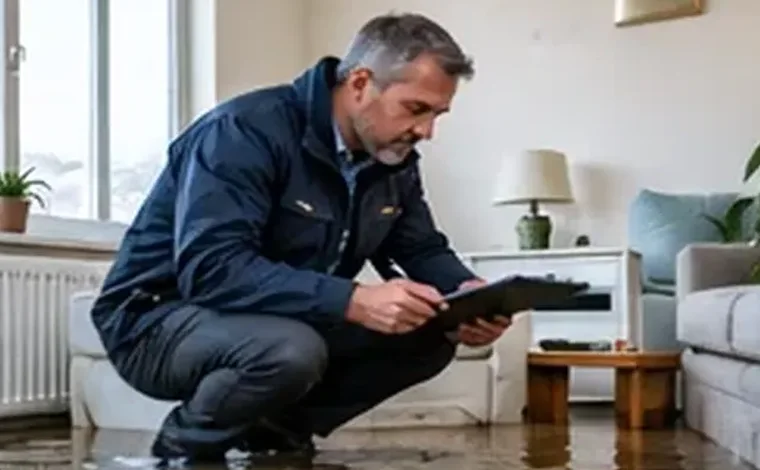
A flood mandate usually starts with sorting out which cover applies: the private house policy for the dwelling, the contents policy and, for residential land, the Natural Hazards Commission scheme. The advocate then inspects the property, reviews moisture readings and drying records, and checks whether the insurer's scope proposes drying where replacement is warranted.
Further work includes pricing reinstatement at post-event rates, supporting the contents claim, negotiating with the adjuster and following the file to payment. After widespread events, the advocate may also need to chase slow responses and keep the claim moving while insurers are stretched.
Moisture testing and specialist input
Independent moisture mapping, mould testing or a hygienist's opinion can be decisive in a flood dispute. Ask whether these are included in the advocate's fee, billed as disbursements, or arranged directly between you and the specialist. Keep their reports, since they may support both your claim and later questions from buyers or lenders.
| Claim value (NZD) | Indicative fee on settlement | Fee on uplift only |
|---|---|---|
| Up to $25,000 | Fixed fee or 12% to 15% | 25% to 30% |
| $25,001 to $75,000 | 9% to 13% | 20% to 25% |
| $75,001 to $250,000 | 7% to 10% | 18% to 22% |
| $250,001 to $600,000 | 5% to 8% | 15% to 20% |
| $600,001 to $2,000,000 | 3% to 6% | 10% to 15% |
| Over $2,000,000 | 1.5% to 3.5% | Negotiated individually |
Indicative amounts, to be checked with each expert.
Indicative NZD fee tiers for flood claims
As for other property claims, percentages generally decline as claim values rise. The table below gives an order of magnitude observed on the market for flood work in New Zealand. It is indicative and not an official scale; firms set their own pricing.
Unless stated otherwise, these figures exclude GST at 15 percent and disbursements such as testing.
Common ways to calculate the fee
Read the proposal to identify both the method and the amount it applies to.
- Percentage of all amounts paid by the insurer for the dwelling and contents
- Percentage of the uplift above a written offer, common where a cash settlement has already been proposed
- Separate treatment of the natural hazard land claim, sometimes excluded from the fee base
- Fixed fee for a review of the insurer's scope or a cash offer
- Hourly rate for advice or a limited role, such as preparing a complaint
- Minimum fee to cover inspection and policy review on small claims
What your policy may reimburse
House policies usually pay for professional fees necessary to repair or rebuild, and may cover emergency drying and temporary accommodation. These provisions are aimed at reinstatement. An advocate's negotiation fee is generally not covered and remains the homeowner's cost.
Businesses should check whether their commercial policy includes a claims preparation costs extension. Where it exists, it often has a sub-limit, may be restricted to accountancy work and may require the insurer's prior consent.
From minor water entry to major inundation
When water only affects floor coverings in a couple of rooms, a fixed-fee review of the scope is usually enough. When a home is flooded to a depth that requires linings, insulation and services to be stripped, a full mandate is more likely to pay for itself. In large losses or for commercial premises, the rate drops but negotiation and specialist coordination grow, so caps and stepped rates are worth discussing.
Post-event pricing is a further factor. After a regional flood, builders and drying contractors are in short supply and quotes rise. An advocate who can show current local rates may recover more than a scope priced on pre-event figures, which can justify a higher fee, but ask to see the evidence of that pricing gap before agreeing to a percentage.
Worked example after a cyclone
Suppose a Hawke's Bay home is flooded to knee height. The insurer offers a cash settlement of NZ$95,000 for the dwelling based on drying and partial replacement of linings. The advocate obtains moisture mapping showing contamination in subfloor and wall cavities, and the parties agree NZ$148,000 for the dwelling plus NZ$32,000 for contents previously valued at NZ$18,000.
On 8 percent of the combined NZ$180,000, the fee would be NZ$14,400 plus GST, about NZ$16,560. On 20 percent of the NZ$67,000 uplift across both heads, it would be NZ$13,400 plus GST, about NZ$15,410. A moisture testing disbursement of a few hundred to a couple of thousand dollars could be added. These figures are illustrative only.
Comparing proposals and spotting red flags
Request written proposals from at least two advocates and compare them using the same claim figures. Check experience with flood and drying standards, availability during busy periods and who will attend inspections.
After major floods, some operators approach homeowners door to door. Be cautious of guaranteed outcomes, high upfront fees and pressure to sign before you have read the terms.
Check also that the advocate is not receiving commissions from builders, drying contractors or restoration firms they recommend. Any such arrangement should be disclosed in writing, as it can affect both the advice you receive and the total cost of the claim.
- Is the natural hazard land claim inside or outside the fee base?
- Are moisture tests and specialist reports included?
- When is the fee payable and how is it collected?
- Is there a fee cap or a stepped rate?
- How can the agreement be ended and what is owed?
Reducing the overall cost
Organise your photos, receipts and contents list before the first meeting. Ask for an uplift-based fee if an offer is already on the table, or a fixed fee if you need only a second opinion. Agreeing the scope of the mandate precisely avoids paying for work you can do yourself.
Organisations offering this service
- Australasian Institute of Chartered Loss Adjusters (AICLA): Professional institute bringing together loss adjusters in Australia and New Zealand, overseeing their qualifications and continuing professional training.
- New Zealand Claims Resolution Service (NZCRS): Free New Zealand government service helping homeowners resolve insurance claim disputes after natural disasters through advice, facilitation and dispute resolution.
- Expert Witness Institute - Medical expert witness services: Page of the UK expert witness institute dedicated to medical expert witness services, aimed at clinicians acting as experts in legal cases.
- La Médiation de l'Assurance: Mediation service for the French insurance sector, publishing a mediator charter and an annual activity report on its handling of disputes.
External links provided for information only; check the terms directly with each organisation.
Frequently asked questions
Is it worth hiring an advocate for a small flood claim?
For limited damage, a fixed-fee review of the insurer's scope or cash offer is often more cost-effective than a percentage-based mandate.
Does my house policy pay for moisture testing?
Testing arranged by the insurer is normally at its cost. Independent testing you commission may not be reimbursed unless the insurer agrees.
Can an advocate help with the land claim too?
Some advocates assist with natural hazard land claims, but check whether that work is included in the fee or priced separately.
Are advocate fees in New Zealand charged with GST?
If the advocate is GST-registered, GST at 15 percent is added. Confirm whether quotes are inclusive or exclusive.
Flood claims often turn on drying and contamination evidence, so budget for testing and choose a fee structure that matches the size of the loss. expertdassure.com recommends comparing proposals carefully before you commit.