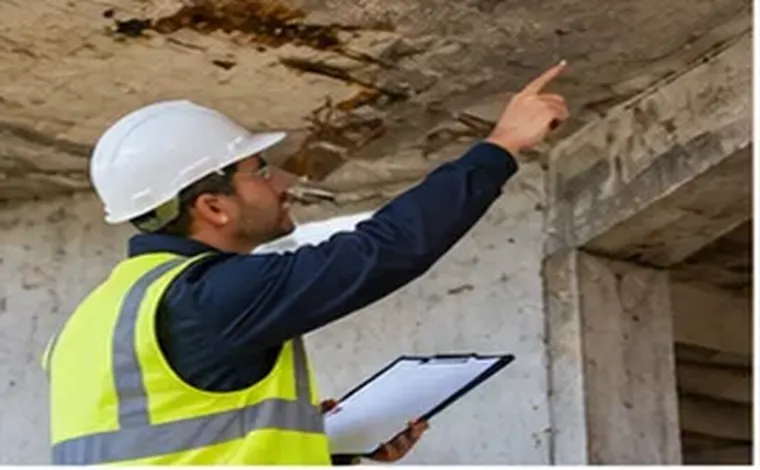
A long claim with many moving parts
When clay soils shrink in drought conditions, the claim that follows tends to unfold in stages: acceptance of liability, site investigation, vegetation management, monitoring through at least one wet and dry cycle, and only then a repair. An expert acting for the homeowner reviews the subsidence wording and excess, attends the initial inspection, checks that borehole and root results have been interpreted fairly, presses for decisions on trees owned by neighbours or councils, and challenges a repair scheme that may not hold.
Their involvement also includes practical items that are easy to forget: alternative accommodation during major works, removal and storage of contents, matching finishes and engineer sign-off for future buyers. All of this is spread over a long period, which is why fee terms deserve close attention.
How fees are usually calculated
Most domestic subsidence work is billed as a percentage of the amount recovered, but firms differ on the base. Some apply it to the entire settlement, including the cost of investigations the insurer would have paid anyway; others exclude the insurer's own investigation and engineering costs and charge only on the repair and associated losses; others still charge only on what they add to the insurer's original proposal.
Alternatives include hourly rates for a review of a declined claim, fixed fees for preparing an ombudsman complaint, and staged fees where a modest initial charge covers the technical review and a lower percentage applies if the expert takes on the full claim. Taxes such as VAT in the UK and Ireland or GST in Australia are usually added.
| Settlement value | Indicative fee range | Common claim profile |
|---|---|---|
| Up to 25,000 | 10 % to 15 % | Minor cracking, garden walls, small extensions |
| 25,001 to 50,000 | 9 % to 12 % | Stitching, tree removal, redecoration |
| 50,001 to 100,000 | 8 % to 10 % | Partial underpinning or drain replacement |
| 100,001 to 250,000 | 6 % to 9 % | Underpinning plus alternative accommodation |
| 250,001 to 500,000 | 5 % to 7 % | Large houses, repeated movement, heave |
| 500,001 to 1,000,000 | 3.5 % to 6 % | Blocks of flats, rental portfolios |
| 1,000,001 to 5,000,000 | 2 % to 4 % | Commercial or multi-unit buildings |
| Over 5,000,000 | 1 % to 2.5 %, negotiated | Exceptional estates and portfolios |
Indicative amounts, to be checked with each expert.
Indicative percentage bands
The table on this page shows an order of magnitude observed on the market, not a regulated tariff. It is degressive: lower percentages apply as the settlement rises. Because drought claims frequently involve underpinning or extensive superstructure repairs, many land in the 50,000 to 250,000 bands. In markets where earth movement is generally excluded from standard cover, such as much of North America, a specialist may instead be retained on an hourly basis to test whether another insured cause can be argued.
What the policy may, or may not, reimburse
UK and Irish buildings policies often cover professional fees reasonably incurred in reinstating the building, such as engineers, surveyors and planning or building control charges. That is valuable, but it generally covers the professionals designing and supervising the repair, not a loss assessor negotiating on your behalf. Some insurers will directly appoint and pay a contractor network, reducing the scope for an independent expert to add value on the repair element.
If you own a let property or a commercial building, check for a claims preparation costs extension, which may contribute within a limit. Legal expenses cover may assist with disputes against neighbours over trees, though conditions and prospects tests often apply. Confirm everything in writing before you rely on it.
Cost by claim size, with an example
On a small claim, perhaps cracking to a garage wall at 6,000 with the main house unaffected, the subsidence excess and possible exclusions for outbuildings often make an expert uneconomic. A medium claim, such as a semi-detached house needing stitching, tree removal and redecoration at around 45,000, is more typical; at 10 % the fee would be roughly 4,500 plus tax.
Consider a larger example. The insurer first proposes superstructure repairs of 70,000. After the expert obtains an independent engineering opinion showing continuing movement, the claim settles at 160,000 including partial underpinning and six weeks of alternative accommodation. At 7 % of the total, the fee is 11,200; at 15 % of the 90,000 increase, it would be 13,500. Add the independent engineer's own invoice, which might run to a few thousand. These amounts are illustrative and vary widely between firms and regions.
Fee traps specific to long-running claims
Each of these can be negotiated at the start. Once the claim has been running for a year, your bargaining position is weaker.
- Fees applied to monitoring and investigation costs paid directly by the insurer to its own contractors.
- Termination clauses that charge a fee on the insurer's existing offer if you end the contract early.
- Separate charges for every additional site meeting over a long monitoring period.
- Uncertainty about who pays if the claim is transferred to a previous insurer after a policy change.
- Contracts that run indefinitely, including any later recurrence claim.
Choosing an expert for subsidence work
Look for demonstrable experience with clay shrinkage claims: familiarity with soil test interpretation, tree root evidence, monitoring data and repair options. Ask which structural engineers and arboriculturists the firm works with and how its contracts handle protected trees or third-party vegetation. Check licensing where it applies; in the US, public adjusters are licensed state by state and some states regulate fee levels.
Treat promises of guaranteed underpinning or a fixed payout with suspicion. A credible expert will explain that outcomes depend on the evidence and that some claims cannot be won.
Negotiating a proportionate arrangement
If the insurer has already accepted the claim, propose a fee calculated only on the improvement, or a cap linked to the original offer. If liability is disputed, an initial fixed-fee review can tell you whether a full mandate is worth it. Ask for a written estimate of independent technical costs, and agree how they will be approved. Comparing two or three proposals side by side usually reveals large differences in what is included.
Organisations offering this service
- Financial Ombudsman Service: Official free dispute resolution service in the United Kingdom, handling complaints from policyholders against insurers, including disputed or rejected insurance claims.
- Chartered Institute of Loss Adjusters (CILA): Chartered UK professional body for claims and loss adjusting professionals, responsible for training, qualifications and standards across the claims profession.
- Aspray: UK network of loss assessors handling and negotiating insurance claims on behalf of policyholders, notably after fire, flood and escape-of-water damage.
- Noble Public Adjusting Group: Public adjusting firm operating nationwide across the United States, advocating for policyholders on residential and commercial property insurance claims.
External links provided for information only; check the terms directly with each organisation.
Frequently asked questions
Does my subsidence excess affect the expert's fee?
It depends on the contract. Some experts apply their percentage to the amount paid after the excess, others to the gross figure. Ask which base applies.
Why are subsidence fees often higher in absolute terms?
The claims are long, technical and involve many meetings and reports, so even a moderate percentage of a large repair produces a significant fee.
Will the insurer pay my independent engineer?
Not usually unless agreed. The insurer pays for the investigations it commissions; your own expert evidence is normally your cost.
Is a fixed-fee review a good starting point?
Often, especially if the claim has been declined. It lets you test the merits before committing to a percentage mandate.
For drought subsidence, the best fee is one that reflects the improvement an expert can realistically achieve over a long process. expertdassure.com recommends settling the base, caps and technical costs before monitoring starts.