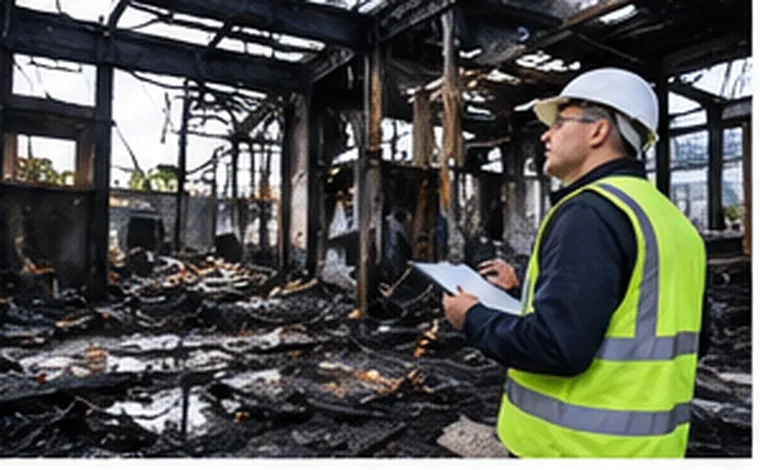
Why fire losses are harder to settle than they look
Fire damage rarely stops at what burned. Smoke travels through ducts, wall cavities and loft spaces, leaving soot and odour in rooms the flames never reached. Water from firefighting hoses soaks floors and plaster, while heat can weaken steel, glass and structural timber in ways that are not visible on the first walk-through.
An explosion adds another layer: pressure waves crack foundations, lift roofs and shatter windows across a wide radius, and the cause may be a gas leak, a faulty appliance, an industrial process or a neighbouring property. Every one of these factors affects what the policy covers and how much the repair will truly cost.
Who comes to inspect after the fire
Once the claim is notified, the insurer usually appoints its own loss adjuster, and on larger or suspicious losses a forensic fire investigator as well. Their brief is to establish the origin and cause, confirm that the event falls within the policy and assess the amount payable. They are professionals, but they are instructed and paid by the insurer.
On the policyholder's side, the equivalent figure goes by different names: a public adjuster in the United States and Canada, a loss assessor in the United Kingdom and Ireland, and an independent claims consultant or policyholder advocate in Australia. Whatever the label, this expert prepares and negotiates the claim for the insured and is answerable to them alone.
Cause and origin: the first battleground
Before anyone talks about money, the investigation into how the fire started can shape the whole claim. A finding of accidental electrical failure points one way; a suggestion of poor maintenance, an unapproved alteration or an unoccupied building may trigger exclusions or conditions in the policy.
If the insurer's investigator reaches a conclusion that threatens cover, an independent expert can arrange a second technical opinion, review the scene evidence and check whether the policy wording genuinely supports a refusal. Keeping debris and damaged appliances until both sides have examined them is essential, because evidence that has been cleared away cannot be re-examined.
Building the evidence file
A strong fire claim is built on documentation gathered quickly and methodically. The insured's expert will typically coordinate the following:
- Photographs and video of every room, including areas affected only by smoke or water
- An inventory of destroyed and damaged contents, with ages, purchase records, bank statements or photos from before the event
- Fire service and, where relevant, police or gas network reports
- Specialist surveys: structural engineer, electrician, smoke and odour testing, asbestos checks for older buildings
- Records of emergency spending on boarding up, security, temporary accommodation and storage
- For businesses, accounts and forecasts supporting a business interruption claim
Contents lists that hold up
Insurers often push back on contents claims that are vague or rounded. Listing items by brand, model and approximate date of purchase, and grouping them by room, makes depreciation and replacement-cost calculations much harder to dispute. Where receipts were destroyed, card statements, online order histories and family photos can fill many gaps.
Putting a price on fire and explosion damage
Quantifying the loss means preparing a detailed reinstatement estimate rather than accepting a single lump sum. That estimate should separate demolition and debris removal, structural repairs, rewiring, specialist cleaning, decoration and the professional fees needed to obtain planning or building-control approval.
Policy basis matters greatly. Some contracts pay replacement or reinstatement cost, others actual cash value after depreciation, and many combine the two with conditions on when the full amount is released. Sums insured that have not kept pace with construction prices can also lead to underinsurance, where the payout is reduced proportionally. An expert acting for the insured will check these mechanics line by line.
Typical points of disagreement with the insurer
Most fire disputes fall into familiar patterns. Insurers may propose cleaning where the insured believes replacement is needed, especially for smoke-affected textiles, electronics and kitchens. Matching is another frequent issue: repairing one wall or one section of flooring can leave a visible mismatch, and policies treat that differently. Depreciation rates, the length of covered alternative accommodation, the scope of code-upgrade costs and the valuation of business interruption periods are also regularly contested.
When to call in a policyholder's expert
Not every small kitchen fire needs outside help. An independent expert becomes worth considering when the building is uninhabitable, when the loss involves a business or rental income, when the insurer questions the cause, or when the first offer seems far below contractor quotes. Acting early is generally more effective than waiting until a settlement has been proposed, because the evidence and estimate can then be shaped from the outset.
Fees are usually a percentage of the settlement or a fixed or hourly arrangement, and in some markets public adjusters are licensed and their fees regulated at state or provincial level. Read the engagement letter carefully, and remember that, if negotiation stalls, the ombudsman schemes in the UK, Ireland and Australia, or the appraisal clause found in many North American policies, remain available.
Organisations offering this service
- EFI Global: International engineering and forensic investigation company conducting fire investigations and technical analyses to support insurance claim settlement.
- International Association of Arson Investigators (IAAI): International association of fire investigators offering training, professional certifications and resources on determining fire cause and origin.
- Financial Ombudsman Service: Official free dispute resolution service in the United Kingdom, handling complaints from policyholders against insurers, including disputed or rejected insurance claims.
- Chartered Institute of Loss Adjusters (CILA): Chartered UK professional body for claims and loss adjusting professionals, responsible for training, qualifications and standards across the claims profession.
External links provided for information only; check the terms directly with each organisation.
Frequently asked questions
Can I start cleaning up before the insurer's adjuster visits?
You should take reasonable steps to prevent further damage, such as boarding up openings, but avoid discarding damaged items or debris until they have been photographed and, ideally, inspected. Keep receipts for every emergency expense.
Is smoke damage covered if the fire was in a neighbouring property?
Many property policies cover smoke damage regardless of where the fire started, but wording varies. Your insurer may later seek recovery from the party responsible, which does not normally delay your own claim.
Who pays for the fire investigator?
The insurer pays for the investigator it appoints. If you commission your own technical expert to challenge a finding, that cost is usually yours unless your policy includes cover for claim preparation or professional fees.
How long does a major fire claim usually take?
Simple claims may settle within weeks, while total losses, explosions or business interruption claims can take many months. Interim payments are often possible for accommodation and urgent repairs.
After a fire or explosion, the quality of the evidence and the estimate largely determines the outcome. Use the guides on expertdassure.com to decide whether an independent expert would strengthen your position before you accept any final offer.