A claim with many possible payers
Unlike a burst pipe at home, a construction problem often involves several parties: the owner, the main contractor, subcontractors, designers, suppliers and their respective insurers. Contractors' all-risk cover, professional indemnity, latent defect or decennial-type insurance and the owner's own property policy may all be relevant, each with different triggers and time limits.
The first technical question is therefore not only how much the repair will cost, but what caused the damage and at which stage of the project it originated. That answer determines which policy responds.
Topics covered in this family
The guides below cover the situations most often met by owners and builders.
- Construction defects discovered after handover, such as leaks, failing finishes or faulty services
- Accidents and damage on building sites during the works
- Long-term liability for structural defects after completion, where such regimes exist
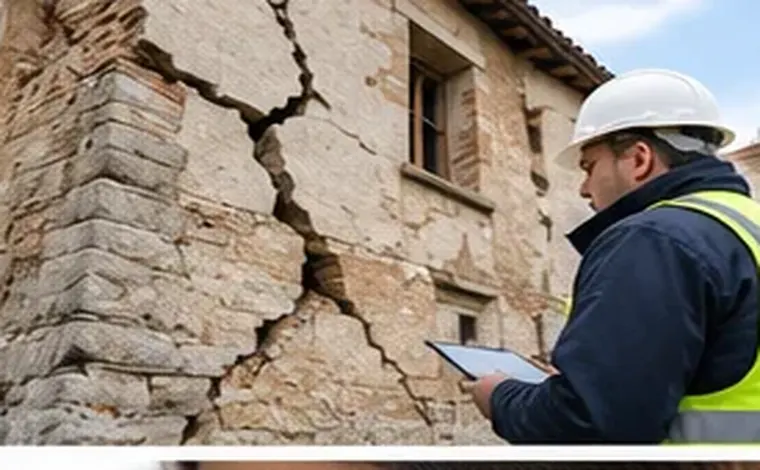
- Cracks, settlement and structural movement in existing buildings
- Construction insurance programmes and how their covers interact
Experts on the insurer's side and on yours
Insurers typically appoint a building surveyor or engineer to investigate the cause and scope of the damage. An owner can commission an independent structural engineer, building surveyor or policyholder-side claims expert to check the diagnosis, the proposed repair method and the costing. In litigation, a court may appoint its own expert, whose report often carries considerable weight.
Typical grounds for dispute
Disagreements usually concern the origin of the defect (design, workmanship, materials or normal wear), whether the damage affects the strength or usability of the building, the extent of the repair needed, and whether a cheaper patch repair is acceptable instead of a full replacement. Deadlines for notification and for bringing a claim are another frequent battleground.
Finding the most relevant guide
If works are still ongoing, start with the building site guide. If the problem appeared after handover, read the construction defects page, then the long-term liability guide where your country has such a regime. Cracks in an older building usually belong to the structural damage page, which also discusses ground movement. Each topic has a matching page on the cost of hiring an independent expert.
Records that strengthen a construction claim
Keep the contracts, plans, specifications, handover documents and any snagging lists. Photograph the damage with dates and measurements, and avoid destructive repairs before the experts have seen the evidence unless urgent safety work is required.
Timelines that shape construction claims
Construction disputes often run for months or years, because the cause must be established before anyone accepts responsibility. Investigations may require opening up walls, testing materials, monitoring cracks over several seasons or reviewing design calculations. Meanwhile, the building may need temporary protection or partial use.
Insurers and contractors sometimes agree on a joint expert to avoid duplicated testing, which can save time and cost if the mandate is clearly defined. Owners should still make sure the questions put to that expert cover their own concerns, including consequential costs such as relocation or loss of rent. Recording every deadline in a single timeline, from handover date to notification and limitation periods, is one of the simplest and most effective protections.
- Building defect claims: getting a fair assessment under warranty and latent defects cover
- Building site accidents: how an independent claims expert handles the loss
- Construction insurance claims: expert assessment across the whole project programme
- Construction insurance claims: how much independent expert help costs
- Expert fees on ten-year construction liability and decennial insurance claims
- Fees for independent experts on building defect insurance claims
- Ten-year construction liability: how experts assess long-tail structural claims
- What an independent expert costs on a building site accident claim
Organisations offering this service
- RICS - Find a member: Online directory of the institution's members, with regional versions covering Oceania, India, the Middle East and Sub-Saharan Africa.
- La Médiation de l'Assurance: Mediation service for the French insurance sector, publishing a mediator charter and an annual activity report on its handling of disputes.
- Royal Institution of Chartered Surveyors (RICS) - Find a surveyor: International professional body for chartered surveyors, offering an online search tool to locate member surveyors and regulated firms.
- Aspray: UK network of loss assessors handling and negotiating insurance claims on behalf of policyholders, notably after fire, flood and escape-of-water damage.
External links provided for information only; check the terms directly with each organisation.
Frequently asked questions
Who should I notify first when a defect appears?
Generally the builder and your own insurer, in writing and within the deadlines in your contracts. The right sequence depends on the covers in place, so check the documents.
Is a hairline crack enough for a claim?
Not always. Many policies require damage affecting the structure or the use of the building. An engineer's monitoring can show whether movement is progressing.
Can I choose my own engineer?
Yes, you can commission your own expert at any time. Whether the cost is recoverable depends on the policy and, in disputes, on the outcome.
Use the list below to reach the guide that fits your project stage and type of damage; expertdassure.com keeps each page focused on one situation.