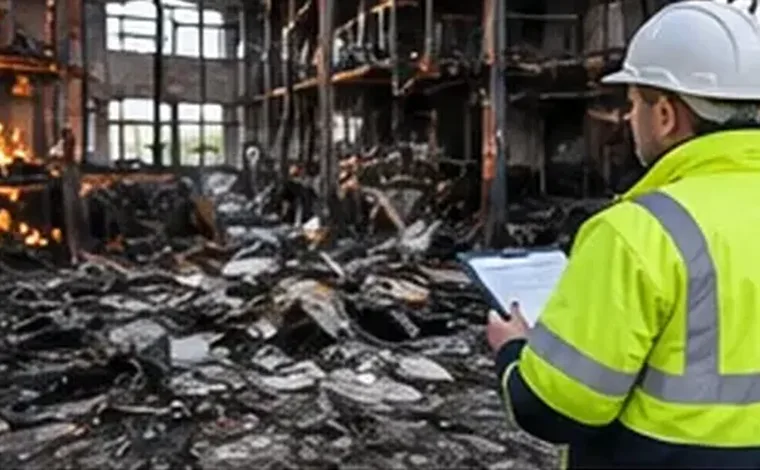
Two professionals, two clients
Once you notify your insurer, it will normally appoint a loss adjuster to inspect the property, investigate the cause and recommend a settlement. The adjuster works for the insurer. A loss assessor, sometimes described as a public loss assessor, is someone you appoint yourself to prepare and argue the claim on your behalf.
In Ireland, loss assessors are expected to be authorised by the Central Bank of Ireland as insurance intermediaries. Asking for that authorisation, and for evidence of professional indemnity insurance, is a sensible first check.
The first 72 hours after the fire
Safety comes first: do not re-enter a building until the fire service confirms it is safe. Then notify your insurer or broker promptly; most policies require early notice. Ask what emergency measures are authorised, such as boarding up, securing the roof or fencing the site, and keep receipts for every expense.
Take photographs and video of every room before anything is moved, including smoke staining on ceilings and inside cupboards. Do not throw away damaged items until the adjuster and, if appointed, your assessor have seen them or agreed in writing that they can be disposed of.
- Fire service incident details and, where relevant, Garda reference
- Photos and video of all affected areas, including contents
- Receipts for emergency repairs, security and accommodation
- Policy schedule, wording and any endorsements
- Proof of ownership: receipts, bank statements, photos, manuals
Hidden damage: smoke, soot and firefighting water
Fire losses are frequently underestimated because the damage outside the burnt room is less obvious. Smoke residues can penetrate soft furnishings, electrical wiring and ventilation ducts; acidic soot can corrode metal and electronics over time; water from hoses can saturate floors and walls in rooms the flames never reached.
An assessor's value often lies in widening the scope of the claim to include these consequential effects, supported by cleaning specialists' reports or moisture readings, rather than accepting a repair plan confined to the area of visible burning.
How the claim is built and valued
For the building, the claim is generally based on the cost of reinstatement: rebuilding or repairing to an equivalent standard, including demolition, debris removal and professional fees where covered. A surveyor or quantity surveyor may prepare a detailed schedule of works that the adjuster then reviews line by line.
Contents are valued according to the policy basis, which may be new for old or indemnity with a deduction for wear and tear. A room-by-room inventory is essential. For businesses, stock, machinery and business interruption are valued separately, each with its own evidence requirements.
Underinsurance and the average clause
If the buildings or contents sum insured is lower than the true reinstatement value, many policies apply average, reducing the payment in proportion to the shortfall. Rebuilding costs in Ireland have risen in recent years, so this issue appears regularly. An assessor will check how the insurer calculated the reinstatement value and whether any day-one uplift or index-linking provision applies.
Where fire claims typically get stuck
Disputes often concern the scope of repairs, whether smoke-affected items can be cleaned or must be replaced, the cost of rebuilding to current building regulations, the duration of alternative accommodation, and the valuation of contents without receipts. Cause investigations can also delay matters, especially where the insurer is examining whether an exclusion or a policy condition, such as maintenance of heating appliances or an unoccupied property clause, applies.
Your assessor responds with evidence: independent quotes, specialist cleaning reports, photographs, and a structured negotiation file. Interim payments can be requested so that accommodation and essential replacements are funded while the main disagreement is resolved.
Realistic timescales
A contained kitchen fire may be settled within a few weeks. A house that must be partly or fully rebuilt can take many months from the fire to the final payment, particularly where planning, structural design or contractor availability is involved. Keep a dated log of every contact with the insurer and adjuster; it is valuable if you later need to complain.
Complaints and independent review
If you disagree with the insurer's decision, start with its formal internal complaints procedure, which regulated firms in Ireland are required to operate. If the outcome is unsatisfactory, consumers and eligible small businesses can usually refer the complaint to the Financial Services and Pensions Ombudsman, a free and independent service. Some policies also contain an arbitration clause for disputes about the amount, and legal advice may be appropriate for high-value or complex cases.
Organisations offering this service
- Financial Services and Pensions Ombudsman (FSPO): Official independent and free Irish ombudsman examining consumer complaints against financial service providers, including insurers, and issuing legally binding decisions.
- Financial Services and Pensions Ombudsman (FSPO): Independent Irish ombudsman handling consumer complaints against insurers and publishing digests of decisions along with annual complaint overview reports.
- La Médiation de l'Assurance: Mediation service for the French insurance sector, publishing a mediator charter and an annual activity report on its handling of disputes.
- Expert Witness Institute - Medical expert witness services: Page of the UK expert witness institute dedicated to medical expert witness services, aimed at clinicians acting as experts in legal cases.
External links provided for information only; check the terms directly with each organisation.
Frequently asked questions
Should I let the insurer's loss adjuster inspect before my assessor arrives?
You should cooperate with the insurer's adjuster, but you can ask for the inspection to be scheduled so that your assessor attends too. Joint meetings help agree facts early.
Can I start clearing the fire debris myself?
Only after the insurer agrees. Removing items too early can make it hard to prove the loss. Photograph everything and get written consent first.
Does my policy cover alternative accommodation after a fire?
Most Irish home policies include some cover for alternative accommodation when the home is uninhabitable, usually up to a limit or a percentage of the sum insured. Check your schedule.
Is a loss assessor worth it for a small fire?
For a minor, clearly covered fire, many people deal directly with the insurer. An assessor tends to add more value where the damage is extensive, smoke spread is disputed or the policy wording is unclear.
A fire claim is strongest when evidence is preserved early and the full extent of smoke and water damage is documented. expertdassure.com suggests reading your policy wording before the first site meeting with the adjuster.